
Exterior updates on Isle of Palms need to do more than look good on day one—they have to stand up to salt air, humidity, sun, and wind over time. The best projects usually combine durable materials, easier maintenance, and design choices that fit coastal conditions without creating endless upkeep. If you are planning improvements before listing or simply want a smarter long-term investment, focusing on resilience can help protect both appearance and property value.
Why coastal durability matters before you choose a single finish
Near the ocean, an exterior upgrade is never just about style. Paint, fasteners, railings, decking, landscaping, and lighting all face a tougher environment than they would farther inland. Salt carried in the air can accelerate corrosion, strong sun can fade finishes faster than expected, and periodic storms can expose weaknesses in materials that looked perfectly adequate in a showroom.
That is why durable exterior planning on Isle of Palms often starts with a simple question: what will still look solid and function well after several seasons of coastal exposure? In many cases, the answer is not the flashiest option. It is the one that balances weather resistance, replacement cost, maintenance routines, and how well the improvement fits the architecture of the home.
Buyers notice this too. Clean trim lines, sturdy stairs, low-maintenance surfaces, and well-kept outdoor living areas signal that a property has been cared for thoughtfully. On the other hand, peeling paint, rust marks, warped boards, or loose hardware can make an exterior feel older than it is, even when the interior is updated.
On barrier-island properties, the best exterior upgrade is often the one that reduces the next five years of maintenance rather than the one that photographs best for a single season.
Siding, trim, and paint choices that tend to age better
One of the most important decisions is the building envelope. In a coastal setting, siding and trim materials should be chosen with moisture management and finish longevity in mind. Fiber cement products, properly detailed engineered materials rated for exterior coastal use, and high-quality composite trim are frequently considered because they can offer a cleaner maintenance cycle than traditional wood alone. That does not mean wood has no place, but it does mean owners should go in with a realistic plan for repainting, sealing, and inspection intervals.
Paint selection matters just as much as the substrate. Premium exterior coatings designed for high UV exposure and humid climates can help finishes last longer and retain color more evenly. Lighter coastal palettes also tend to show less heat stress than darker finishes, though the ideal choice depends on architectural style, orientation, and the amount of direct sun the home receives during the day.
Trim details deserve extra scrutiny. Window surrounds, fascia boards, soffits, and corner boards are all high-visibility areas where swelling, cracking, or paint failure shows up quickly. Using materials that resist moisture intrusion and installing them with careful flashing and sealing can make a visible difference over time.
Explore Isle of Palms listings
Decking, railings, and porches are worth upgrading with maintenance in mind
Outdoor living space is a major part of the appeal of coastal property, so decks, porches, and railings often deliver strong visual impact. They also tend to absorb some of the harshest wear. If a homeowner is deciding where to invest, this is one of the smartest areas to evaluate carefully because people interact with these surfaces constantly and deferred maintenance becomes obvious fast.
Composite decking is popular for a reason. It can reduce the cycle of sanding, staining, and splinter repair that comes with some traditional wood surfaces, especially in damp and salty conditions. The look has improved considerably in recent years, and on many homes it provides a practical blend of appearance and durability. Good drainage, proper fastening, and attention to airflow beneath the deck are just as important as the board material itself.
Railings are another upgrade where coastal-grade choices matter. Powder-coated aluminum, marine-grade hardware where appropriate, cable systems designed for exterior exposure, and well-built composite railing assemblies can hold up better than lower-cost alternatives that begin showing corrosion early. Even small details like exposed screws, hinge quality, and gate latches can influence how “finished” an exterior feels after repeated weather cycles.
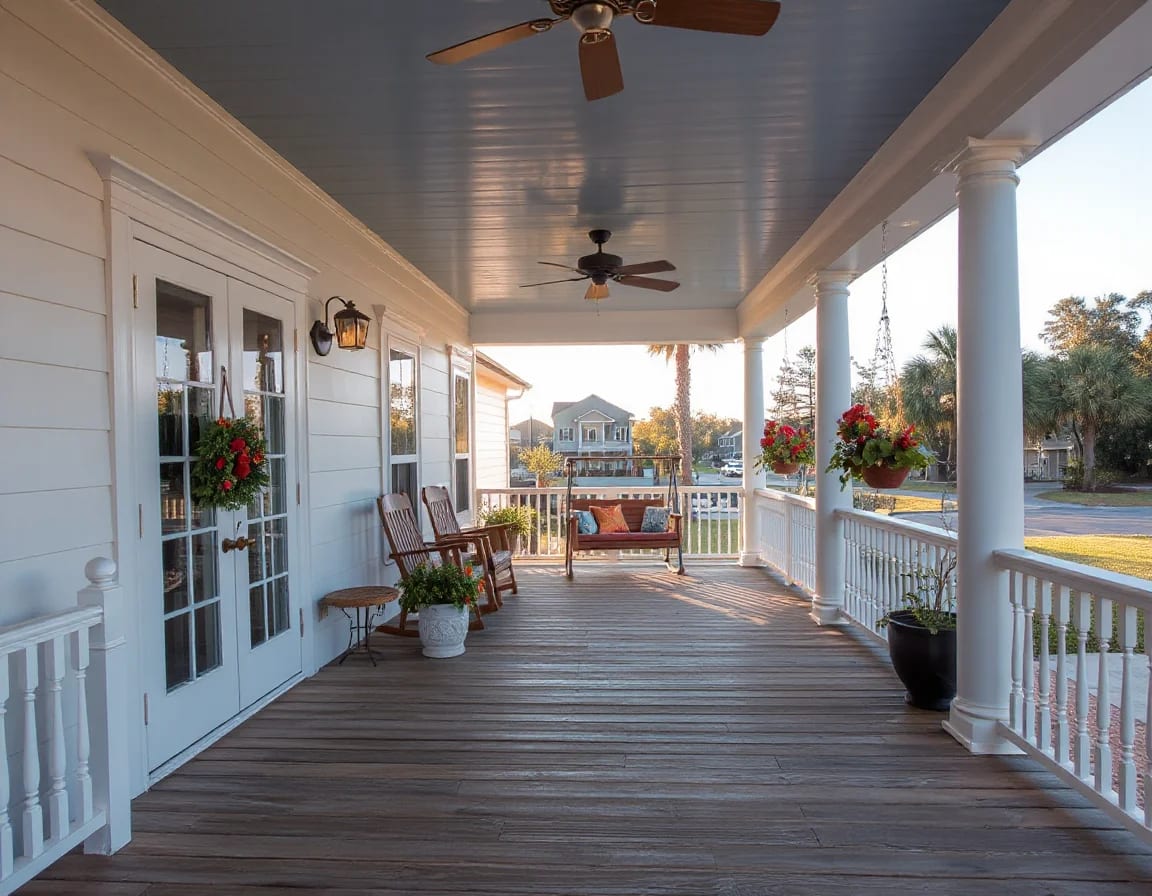
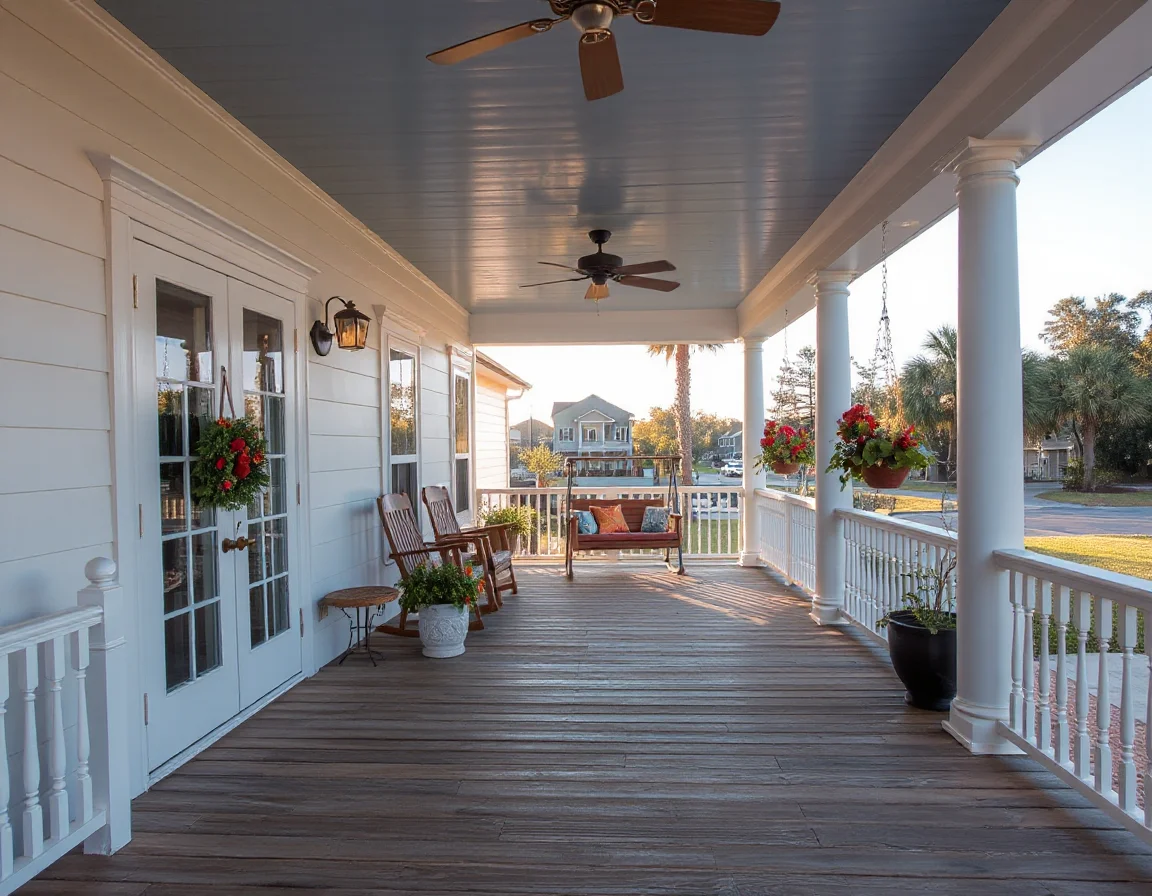
For porches, beadboard ceilings, fans, lighting, and under-roof finishes should be selected with humidity resistance in mind. A porch that remains bright, stable, and easy to maintain adds usable outdoor square footage in a way that buyers and owners immediately understand.
If a deck or porch project is already underway, upgrading the hardware package at the same time can be one of the most cost-effective ways to improve long-term performance near the coast.
Roofing, windows, and entry details can quietly carry major value
Some of the most valuable exterior improvements are the least glamorous. Roofing materials suited to coastal exposure, impact-conscious window selections where applicable, storm-rated doors, and durable shutters can all strengthen a home’s exterior performance while also improving curb appeal. A crisp roofline and well-proportioned entry create a strong first impression, but their practical role is even more important.
Metal roofing is often discussed in coastal markets because of its durability, longevity potential, and clean appearance. Architectural shingles may still be the right fit on certain homes, but product quality, installation standards, and flashing details should be taken seriously either way. The same is true for windows and doors: even excellent materials underperform if installation is poor.
Entry upgrades can also go a long way. A substantial front door, quality house numbers, coordinated lighting, and corrosion-resistant hardware create a polished arrival without requiring a full exterior overhaul. These are the kinds of improvements that help a property feel intentional rather than pieced together.
Learn more about Isle of Palms
Landscaping and exterior features should match the setting, not fight it
Landscaping on Isle of Palms works best when it respects the coastal environment. That usually means favoring salt-tolerant plantings, simpler bed layouts, efficient irrigation planning, and hardscape materials that can handle moisture and sun. A yard that looks organized and regionally appropriate often performs better than one built around delicate plant material that constantly needs replacement.
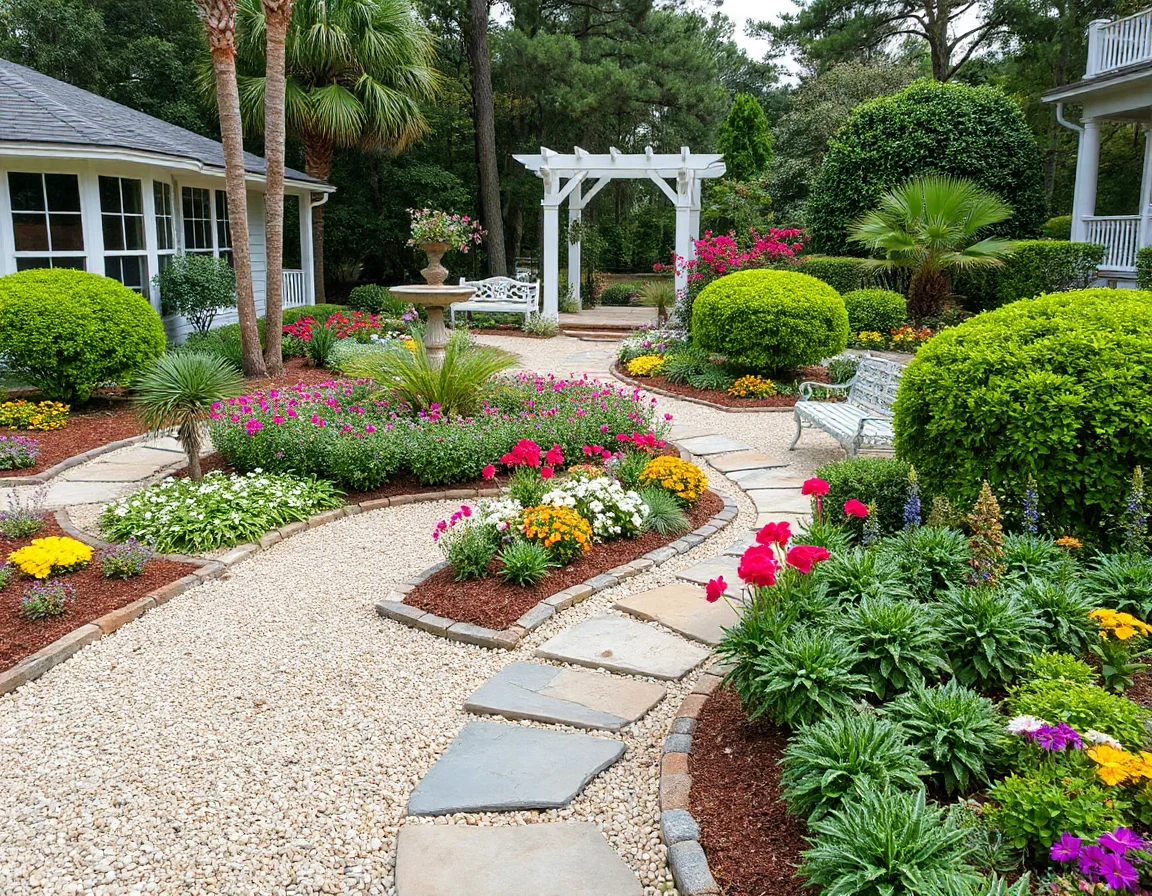
Landscape lighting is another upgrade that can add real value when done thoughtfully. Low-profile fixtures, warm light, and corrosion-resistant components can improve evening curb appeal and outdoor usability without overwhelming the property. Walkways, stairs, and entry approaches are especially good places to focus.
Driveways, paver areas, outdoor showers, fencing, and storage enclosures also benefit from a durability-first approach. Materials that resist staining, hold up to sand and moisture, and clean easily are often the stronger long-term choice. In a beach-area market, these supporting features may not be the headline item, but they contribute significantly to the overall impression of order and quality.
When owners overbuild with materials that demand constant attention, maintenance becomes the story. When they choose finishes suited to the setting, the property tends to feel calmer, cleaner, and better prepared for the realities of coastal ownership.
The upgrades that usually hold up best are the ones that look intentional years later
A successful exterior project near the coast is not only about immediate visual impact. It is about how the home will present after hot summers, storm seasons, and routine salt exposure. The most durable improvements typically share a few traits: they use better-suited materials, they are installed carefully, and they reduce the number of recurring maintenance headaches that can chip away at value over time.
For property owners on Isle of Palms, that means prioritizing projects that improve resilience as much as appearance. Whether the goal is preparing a home for the market or making practical upgrades for years of ownership, exterior decisions should support both curb appeal and long-term performance. In a coastal environment, the smartest upgrade is usually the one that still looks like a smart upgrade long after the contractor has packed up.